
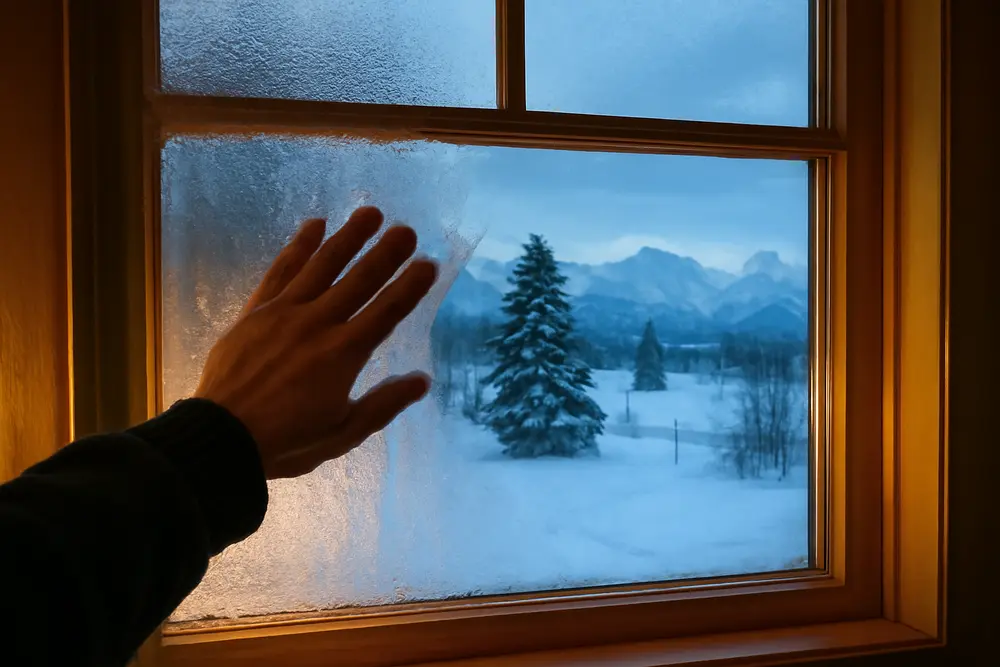
Alberta’s air is so dry in winter that your knuckles crack just reading this sentence. That’s why humidifiers are household heroes here. But if your morning routine includes towel-drying the inside of your windows, your house is waving a red flag. This quick homeowner’s guide shows you exactly how to use both portable and whole-home humidifiers in Alberta’s climate without creating window condensation and mould. We’ll cover safe indoor humidity targets by outdoor temperature, the warning signs you’re over-humidifying, and the simple fixes that keep your glass clear and your attic frost-free.
Why Alberta Homes Sweat In Winter
Warm indoor air holds more moisture. When that moist air touches a cold surface, like a winter-chilled window, it drops water. That’s condensation, and if it sticks around you can get staining, warped sills, swollen trim, and eventually mould. Older double-pane units, metal frames, and recessed windows run colder, so they hit the dew point sooner. Even high-performance triple-pane windows can sweat if the blinds are closed tight at night and air can’t wash over the glass.
Air leaks also play a role. Moist indoor air escaping into a cold attic can freeze on the underside of the roof deck. When it warms up, that frost melts and drips, which looks a lot like a roof leak. It’s not always the roof. Often it’s too much indoor humidity and poor ventilation working together.
Safe Indoor Humidity By Outdoor Temp
The colder it gets outside, the lower you need to set indoor humidity to avoid condensation. Here’s a simple Alberta-friendly target chart to keep your humidifier honest. These ranges draw on Alberta HVAC guidance and Natural Resources Canada style recommendations.
| Outdoor Temperature | Target Indoor RH |
|---|---|
| Below -30 °C | 20–25 % RH |
| -30 °C to -20 °C | 25–30 % RH |
| -20 °C to -10 °C | 30–35 % RH |
| -10 °C to 0 °C | 35–40 % RH |
Most Alberta homes spend a lot of winter in the 30–35 percent RH range. That’s the sweet spot where skin feels human, woodwork is happier, and windows usually stay clear. Once indoor RH creeps above 50–60 percent, the risk of mould jumps. If you have older or very cold windows, you may need to sit at the low end of these ranges. If you have newer triple-pane windows and good air circulation, you can usually sit near the high end when outdoor temps are closer to zero.
Pro tip: grab a couple of inexpensive hygrometers and park them near your coldest windows and in a bedroom. Use those, not your dry lips, to set the humidifier.
Setting Whole-Home and Portable Humidifiers
Whole-home humidifiers are great for steady, even moisture. Portable units shine when you just need a boost in a bedroom. Either way, the game plan is the same: set a safe target, monitor, and adjust with the weather.
For furnace-mounted units, set the humidistat based on outdoor temperature. If your humidifier has an outdoor sensor or “auto” mode, make sure the low-temperature cutback is enabled so it dials humidity down as temperatures fall. If you have a manual dial, start around 35 percent RH when daytime highs hover near -10 to 0 °C, then drop your setpoint by about 5 percent for every 10 degrees the outdoor temperature falls. Watch your windows the first few very cold nights and adjust again if needed.
For portables, size them correctly for the room and avoid running multiple units full tilt throughout the house. Clean and disinfect them weekly in winter, use fresh water daily, and stick to distilled or demineralized water if you’re seeing white dust. Keep units at least a few feet from windows and away from supply vents so sensors read room air, not blasts of heat or cold. If a bedroom window fogs overnight, reduce the output and crack the door to share moisture with the rest of the home.
One more setting that matters: run your furnace fan on low continuous during cold snaps. Gentle air movement evens out room temperatures, warms the inner pane of glass, and reduces condensation risk without changing your RH setpoint.
Warning Signs You’re Over-Humidifying
If any of this shows up, it’s time to dial your humidity down and ventilate more:
Windows that fog, sweat, or show ice at the sills overnight. Water beading on frames or drywall, or paint blistering near windows. A musty smell in bedrooms or closets. Black or grey spotting on window sills, bathroom ceilings, or exterior corners. Frost in the attic on really cold mornings. If you’re wiping moisture daily, your humidity is too high for your window performance and current outdoor temperature.
What to do right away: lower your humidifier setpoint by 5 to 10 percent for 48 hours, open blinds at night so warm room air can wash the glass, run your HRV or bathroom fans for longer, and squeegee or towel-wipe any wet surfaces so they do not feed mould.
Simple Fixes That Actually Work
If you want fast window condensation prevention without expensive upgrades, start with these practical habits. They cost little and pay off all winter.
Bathroom And Kitchen Moves
Use the bath fan during showers and for at least 30 minutes after. A timer switch makes it painless. In the kitchen, use a vented range hood whenever you cook, especially while boiling or frying. Keep pot lids on when you can and avoid simmering stock all day on very cold weekends if you’re already seeing condensation. If you dry clothes indoors, switch to a properly vented dryer or a dedicated drying room with a dehumidifier.
Windows And Airflow
Open blinds and curtains at night during cold spells so warm air can reach the glass. Move furniture that blocks supply or return grilles. Use continuous low furnace fan to keep temperatures even. If a particular window is always wet, a small, quiet desk fan on low, aimed across the glass, can make a surprising difference without changing the RH setpoint.
Dehumidifiers And When To Use Them
Yes, a dehumidifier can be useful in winter. Basements tend to be cooler and can collect moisture from showers, appliances, or slab diffusion. If your basement RH runs above 45 percent in winter, set a small dehumidifier there to 40–45 percent and drain it to a floor drain. If your main floor is dry but the basement is sticky, that split can still fog windows upstairs because moisture migrates. Balance the whole house, not just one room.
HRVs and Ventilation That Help
Heat recovery ventilators are airflow machines, not humidifiers, and in Alberta’s winter they usually lower indoor humidity by exchanging moist indoor air with very dry outdoor air while recovering heat. If your home has an HRV, run it on continuous low in winter and use the 20, 40, or 60 minute boost during showers, cooking, or large gatherings. Keep filters clean and check the core for frost according to the manufacturer’s schedule.
Balanced is the keyword. If the HRV exhausts more than it supplies, your home can go slightly negative, which draws moist air from living spaces into the attic or wall cavities through gaps. If it supplies more than it exhausts, you can push moist air into hidden corners. A properly balanced HRV helps keep humidity stable and prevents frost where you do not want it.
How it plays with your humidifier: let the HRV do the heavy lifting on stale air and source moisture, then fine-tune comfort with the humidifier at the safe setpoint for the day’s temperature. If you’re lowering the humidifier for a cold snap, keep the HRV running to clear showers and cooking quickly so you do not have to raise RH for comfort.
Preventing Mould Growth In Winter
Mould needs moisture. Keep indoor RH in the safe range, dry wet surfaces fast, and most mould problems never start. Wipe condensation from window sills and frames in the morning. Use mould-resistant caulk around tubs and showers and repaint bathroom ceilings with a quality bathroom paint if they collect condensation. Fix plumbing drips within 48 hours. Air seal and insulate cold corners and attic bypasses so they do not form tiny indoor “ice boxes.”
If bathrooms are a repeat offender, we wrote a guide to why mould grows on bathroom ceilings and how to stop it with better exhaust, drying routines, and maintenance. For seasonal patterns, our post on seasonal mould growth in Canadian homes explains why winter creates cold surfaces and how humidity control changes with the weather.
General rule of thumb: keep indoor humidity below 50 percent year-round, and in winter aim for 30–40 percent depending on the outdoor temperature and your windows. Above 50–60 percent for days at a time and you are in the mould risk zone.
What If You Already Have Mould?
Small, light surface growth on a window sill or bathroom paint can often be cleaned with detergent, water, and a gentle scrub, then dried. The source still has to be fixed, or it will return. If you are seeing recurring growth, musty odours that do not go away, or visible mould patches larger than about a sheet of printer paper, it is time to bring in pros who can test, contain, and remove the problem safely.
Our mold team follows industry protocols that include containment with HEPA negative pressure, source correction, safe removal of contaminated porous materials, detailed cleaning, sanitizing, and post-remediation drying. If needed, we sample to confirm the fix. You can see how we work here: Mold Testing and Removal. If the issue is attic frost or window condensation that comes back every cold snap, we can help diagnose whether the root cause is humidity, ventilation, insulation, or all three.
Planning to renovate where there is mould or moisture damage in a pre-1990 home? Do not cut, grind, or sand suspect materials without checking for asbestos. We test and remediate that too.
Quick Winter Humidity Checklist
Set indoor RH to match outdoor temperatures using the chart above. Place two hygrometers near cold windows and in a bedroom. Open blinds at night during cold spells and run the furnace fan on low continuous. Use bath fans during showers and for 30 minutes after, and use the range hood when cooking. Keep the HRV on low continuous and boost for showers and gatherings. Drop the humidifier setpoint 5–10 percent if windows fog or ice shows up. Wipe condensation from frames and sills every morning. Use a dehumidifier in the basement if it sits above 45 percent RH in winter. If you see recurring mould or attic frost, book an inspection.
Alberta Humidity Control FAQ
What humidity is best for Alberta homes in winter?
Most homes feel good and stay safe at 30–35 percent RH, but you should adjust based on outdoor temperature and your windows. Near 0 °C outdoors, 35–40 percent is often fine. From -20 to -30 °C, 25–30 percent is safer. Below -30 °C, 20–25 percent helps stop ice on frames.
Why do my new triple-pane windows still sweat?
Even efficient windows can sweat if blinds are closed tight, airflow is poor, or indoor humidity is set too high for the outdoor temperature. Open window coverings at night during cold snaps, run the furnace fan, and reduce your humidifier by 5 percent increments until the fog stops.
Should I run my HRV when it is very cold?
Yes. Run it on low continuous and use boost during showers or cooking. Most HRVs have defrost cycles for very cold weather. Clean filters so it can move air efficiently without overcooling.
Is a portable humidifier safe in a kid’s room?
Yes if you monitor RH with a hygrometer, keep it clean, and set output conservatively. Aim for 30–35 percent when it is -10 to -20 °C. If the window fogs overnight, reduce output and keep the door open a few inches.
How do I stop attic frost?
Lower indoor humidity during cold snaps, run your HRV or fans more, and seal attic air leaks around ceiling penetrations. Bath and kitchen fans must vent outdoors. If frost persists, book an attic inspection to check air leakage and insulation.
Can too little humidity cause problems?
Yes. Very dry air can irritate airways, dry out skin, and shrink wood floors or trim. In Alberta, that usually shows up when RH falls below the mid 20s. Use your humidifier to stay in the safe range for the day’s weather.
Will a dehumidifier run in winter?
Most portable units work best in spaces above about 18 °C. They are great in basements that run damp. If your basement is colder, look for a low-temperature model or use ventilation and source control instead.
When should I call a professional?
If you have ongoing condensation despite following the chart, persistent attic frost, or visible mould larger than a small patch, bring us in. We can measure, test, and fix the root causes so you are not stuck wiping windows all winter. Start here: Mold Testing and Removal.
If you want the short version of Alberta humidity control: track indoor RH with a hygrometer, match your humidifier setting to the outdoor temperature, ventilate when you make moisture, and keep airflow over the glass. Do that, and your windows will stop crying and your attic will stop growing icicles on the underside of the roof deck. That is the kind of window condensation prevention we like to see.